

Armenia - Small but perfectly formed
- Apr 21
- 7 min read
We woke to a beautiful bright sunny morning. The road to the border had stunning stark vistas. It seemed strange seeing a modern looking border post after driving past lots of derelict or run down towns to reach here. The border crossing was relatively easy. I had to go through on foot while Colin took Lolly through. The customs lady gave us both a particularly warm welcome to her country and told us this was the coldest part of Armenia which we were relieved about.
We had to buy third party vehicle insurance from a small hut, and Colin had a very entertaining half an hour with a few truck drivers watching the guy having a meltdown when he couldn't get his computer to work and making ranty phone calls to his IT support (or a young person no doubt).

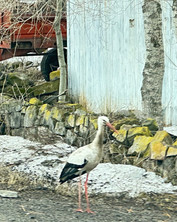





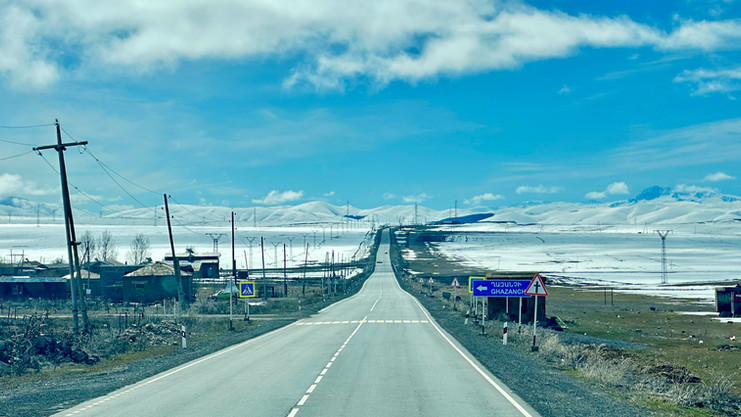
The road on the Armenian side was thankfully much smoother than the Georgian side. Well it was until we reached the outskirts of Gyumri when it reverted to a potholed mess. Gyumri is Armenia's second city, dating back 2,500 years. The city was largely destroyed by the 1988 earthquake that killed around 50,000 people, but much of it has been restored with the help of foreign aid, and we have to say we really liked the feel of the place.
We managed to park up in the central square and enjoyed a few hours wandering around the central streets, admiring the architecture, much of it dark looking black and apricot stone, and having good coffee. There are a number of recommended art galleries and museums to visit, but we hadn't realised most, sadly, don't open on Mondays.
We had a look in the two main churches and walked through the market. As we were leaving, Colin and Theresa, the German couple we've bumped into several times, were pulling up.
On the way out of the city we drove past a large archway with a statue of Charles Aznavour, the 1970's French crooner. He was born in Paris to Armenian immigrants who had fled the genocide and had founded a charity to help Armenia following the 1988 earthquake, so he is obviously viewed as a nations' favourite as we saw many statues and structures in his honour all over the country.
We also visited the bizarre looking Iron Fountain. It was sitting on the edge of the city in what looked like wasteland, but we read it was originally built in the 1980's attached to the city's University which was levelled in the 1988 earthquake, but the fountain survived intact.






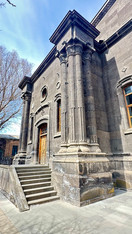


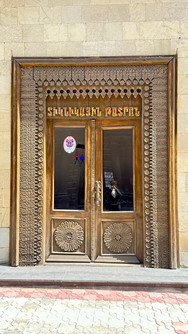


Armenia is a small country, so it was only about a 120km drive to reach the capital of Yerevan. it was a pretty scenic drive, and the road signs reminded us we weren't far from 'troubled' Iran. We hit the city in rush-hour which made for a very stressful challenging drive to reach our park up spot by one of the main landmarks, The Mother of Armenia. The driving in Armenia feels even more bonkers than Georgia - barging in, not giving an inch. We breathed a big sigh of relief as we pulled into the parking area. Just behind us was incredible views of the city with Turkeys's Mount Ararat towering behind it. We had a walk through the very Soviet looking park which had a dated looking fairground and naff dinosaur park (which I was glad we'd spotted or I'd have been wandering what the heck the weird noises were at night). We also visited Victory Park for more city views that we could see would be our access on foot into the main part of the city the following day.


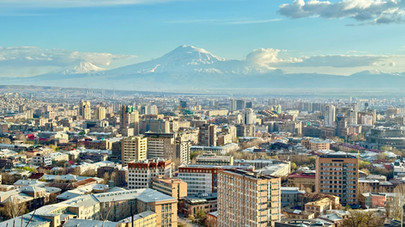


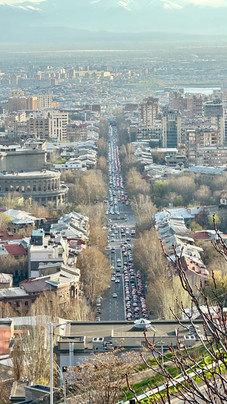


We booked ourselves on a free walking tour the following day, but it didn't start until 2pm, so we had time time to get a nice brunch and explore a bit ourselves. The first iconic part of the city was the Cascades, a monument of 572 steps connecting the upper and lower city. The monument was originally designed in the 1920's, but work didn't begin on it until the 1980's. Then the earthquake and fall of the Soviet Union meant that the top section was never completed. An Armenian-American philanthropist eventually stepped in and transformed the finished parts of the structure into galleries where his work is now displayed. At the base of the monument there is a quirky sculpture garden.
We were conscious that we would be seeing most of the key sites on our walking tour, so we spent some time wandering around some parks, one being a rather tatty English Park. Much of the city centre has been redeveloped with modern architecture, so it wasn't having a wow factor yet.










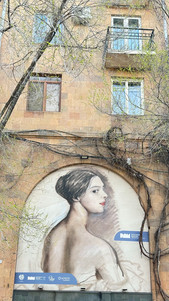


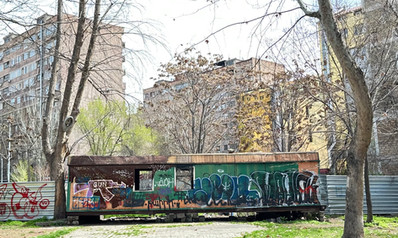


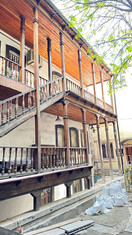
The walking tour started in the large Republic Square where grand buildings of old government offices and the History Museum surround it. There were two guides waiting when we arrived which we thought was strange, and were told the guy leading the tour wasn't feeling 100%, so the other guy was there just in case he needed back-up. The rest of the group eventually arrived - 2 American girls, a French-Armenian girl, an English girl and a young Australian guy, who had all met at a backpackers in Tbilisi. Then there was an English journalist (working for GB News - not the TV show he assured us when he must have seen us grimace) and a Finnish lady. When the tour started we could see this wan't going to be a fun filled tour. The main guide was softly spoken and every time he said his piece, the other guide seemed to chip in or add something and as we walked on to the next stop we could see him bending the ear of the main guide who was looking a little upset. The backup guide then kept insisting the first guide wasn't feeling well, and then eventually told us he was leaving. We all looked at each other having the same thought - I felt sorry for the original guide, but hoped the stand in one would be more entertaining. He was, but maybe not for the right reasons. He got very antsy with the younger girls saying they were being rude for talking when he was and he had a very strange sense of humour, so we weren't sure when to laugh or not. We looked at some older building with the traditional wooden balconies, an old metro station and an arty area and saw some stone masons chiseling stone crosses. It was supposed to be a Geo-Political history tour, and we did glean a bit about what a torrid time the country had suffered through invasions from its neighbours and the genocides.
We were also taken to a restaurant to sample some local Georgian dishes, and this was a good part of the tour. We tried some delicious flat breads and dips. We'd planned to go out for dinner in the evening, but we didn't need to after this. The tour ended at the Cascades. We had planned to get a taxi back up to Lolly but the guide mentioned there was an escalator inside the cascade which hadn't seen. We had a drink in the city before heading back up. When we got back up to the park, we saw the rest of the group having a drink in a cafe bar, so we joined them for a beer. We all had a good laugh about the tour. They were a fun group, reminding us of what it's like to be young, carefree and spontaneous.








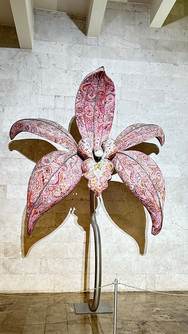


The following day we wanted to visit the Genocide Memorial and Museum. It was over the other side of the city and we could't see an easy way to do it on public transport, so we ended up walking down the Cascades again and finding a taxi. It certainly wouldn't have been a nice walk to get there.
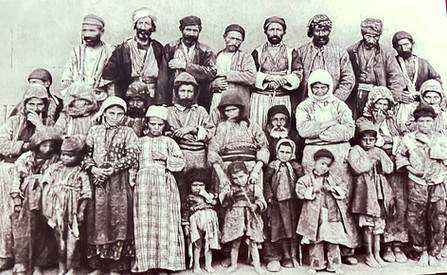
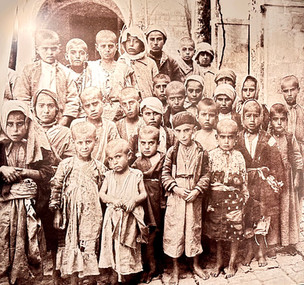
We have to confess that we knew very little about the genocide in Armenia. It is definitely over-shadowed by the Jewish holocaust, Rwandan and Cambodian genocides in the 20th century. Armenia is one of the oldest countries in the world, and was the first to adopt Christianity as its state religion. Throughout its history it has suffered attacks from the Mongols, the Ottoman Empire, and has been controlled by the Soviet Union until Independence in 1991. While the Ottoman Empire was crumbling in WW1, Armenians were looking to establish their own nation-state. Turkeys Young Turks, who were fiercely against Russia, ordered the forced deportation of Armenians as part of an ethnic cleansing exercise resulting in the mass killings of between 800,000 and 1.5m Armenians between 1915 and 1922. The history , starting with the life of persecuted Armenians under the Ottoman rule, is laid out on boards around the modern museum building, with photos, films and documents. It was a lot of information to take in on a single visit. Turkey still to this day doesn't accept this was a genocide situation, saying there was no extermination order and the population of Armenia was not as large as Armenians claim at that time. A number of other states are still not openly accepting it was genocide, although it may be they don't want to risk weakening geo-political ties with Turkey.







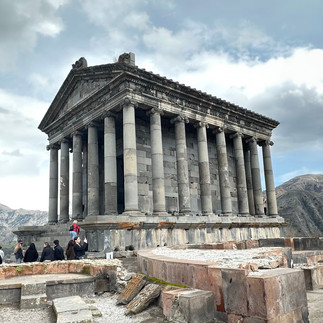
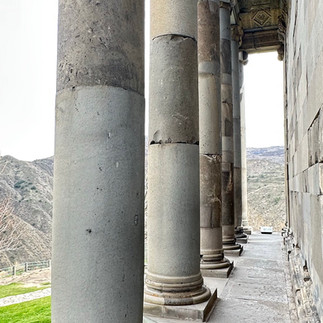
There were probably other sites in Yerevan that we would have liked to see with more time, but after picking up Lolly, we headed out of the city about an hour East to Garni which is home to some special attractions. The traffic leaving the city was still pretty hairy, with potholes and missing manhole covers larger than wheels to dodge. We stopped at the viewpoint of Charent's Arch just before Garni. Next stop was the Garni Temple, a 2,000 year old pillared Roman style temple. It was first built in 77CE, but was rebuilt in the 1970's after being destroyed in an earthquake. It looks down into a stunning gorge







We carried on to a campsite just a few miles up the road, owned by a lovely Dutch lady. Colin and Teresa were already parked up, so after being shown around the fabulous immaculate facilities - kitchen, showers, washing machines and swimming pool we got settled in and admired the incredible views across the valley. We spent a nice evening learning more about the Germans life and travel plans.




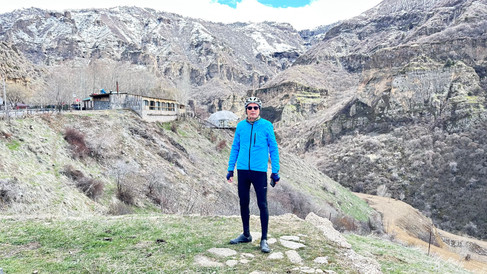
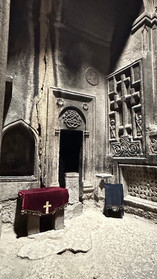
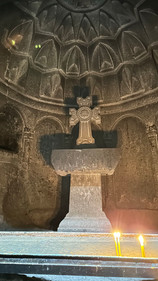
We woke to a covering of snow in the morning. Once it had cleared we got our bikes out to cycle the few miles up the road to the UNESCO listed Geghard Monastery. The main church was built in 1215 and had some intricate stone carvings in the chapel. On the cycle back we stopped at the strangest restaurant for a coffee and a snack but with great views.













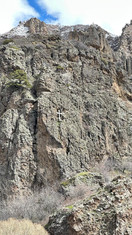


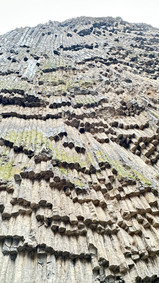
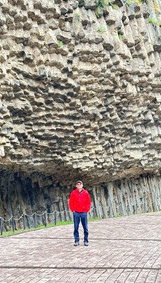
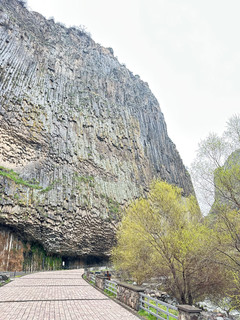
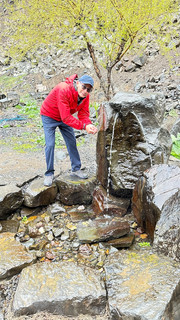
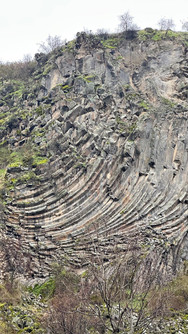
The following morning we hit the road again, visiting the amazing Symphony of Stones in Garni first. The rock faces in the Garni gorge are made up of basalt columns, like those of the Giants Causeway, and the effect is magical, like the tubes of an organ hence its name.















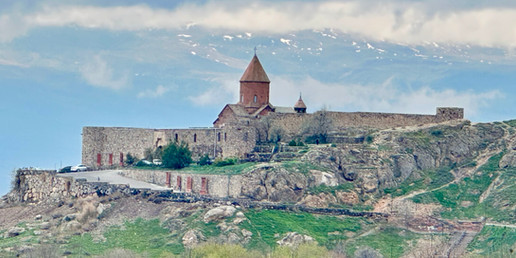
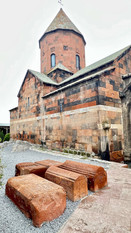
We retraced our steps towards Yerevan before heading south towards the wine region of Areni. En route we visited the impressive Khor Vrap Monastery which sits in a prime location with stunning views of Mt Ararat, although low clouds were obscuring our view that day.

















Time for a break. TBC....


Comments